


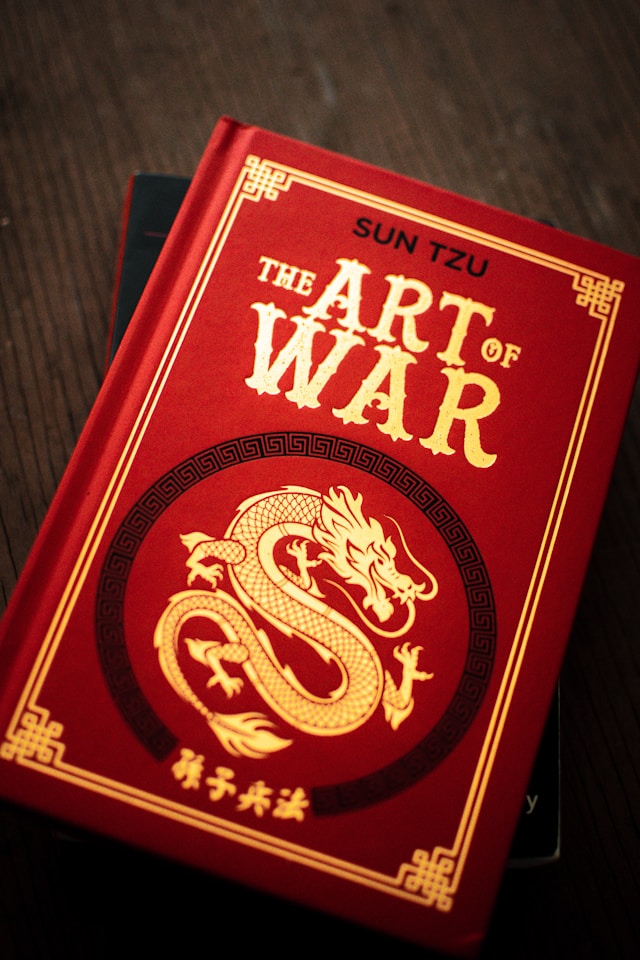
The Art of War remains indispensable not because every tactical recommendation belongs to the modern world, but because its understanding of strategy and human judgment has proved remarkably durable.
Traditionally attributed to Sun Tzu and generally dated to the late Spring and Autumn Period or early Warring States era of ancient China (around the fifth century BCE), The Art of War is a foundational work of military strategy. Though written for commanders and rulers, it has been read for centuries far beyond military contexts, influencing thinking in politics, business, diplomacy, and leadership. It is widely regarded as one of the most important strategic texts ever written. (britannica.com, en.wikipedia.org)
What I most admire is the restraint of its ambition. Sun Tzu is not interested in celebrating battle but in avoiding unnecessary conflict whenever possible. Victory, in his conception, belongs not to the strongest force but to the one that understands circumstances more clearly than its opponent. The recurring emphasis on preparation, adaptability, intelligence, and self-knowledge gives the work a philosophical dimension that explains its endurance. It asks readers to think carefully before they act, an approach that remains valuable regardless of whether one's challenges are military, professional, or personal.
Its greatest strength is the economy with which it conveys profound ideas. Many of its observations are expressed so concisely that they invite repeated reflection rather than offering immediate, exhaustive explanation. The brevity encourages readers to return to the text over time, often finding different meanings as their own experience grows.
Its weakness, if it can be called one, lies in that same concision. The Art of War is highly dependent on translation and interpretation, and many passages are so compressed that they can appear vague or overly universal when removed from their original historical context. Readers seeking detailed practical instruction may find the text more suggestive than definitive.
On my scale, five stars are reserved for books that accomplish their purpose with exceptional authority while continuing to reward careful rereading across generations. The Art of War earns that distinction because it offers principles rather than prescriptions. Its insights into strategy, leadership, and decision-making remain intellectually stimulating precisely because they resist becoming rigid formulas. I have encountered few books that say so much with so little.
I would recommend The Art of War most readily to readers who enjoy classics of philosophy, history, or leadership, particularly those willing to approach it as a work of strategic reflection rather than a manual to be applied uncritically to every aspect of modern life.